
“When you have warfare things happen; people suffer; the noncombatants suffer as well as the combatants. And so it happens in civil war. When your forefathers threw the tea into Boston harbour, a good many women had to go without their tea. It has always seemed to me an extraordinary thing that you did not follow it up by throwing the whiskey overboard; you sacrificed the women; and there is a good deal of warfare for which men take a great deal of glorification which has involved more practical sacrifice on women than it has on any man. It always has been so. The grievances of those who have got power, the influence of those who have got power commands a great deal of attention; but the wrongs and the grievances of those people who have no power at all are apt to be absolutely ignored. That is the history of humanity right from the beginning…
Women are very slow to rouse, but once they are aroused, once they are determined, nothing on earth and nothing in heaven will make women give way; it is impossible… their spirits are unquenched .. and they mean to go on as long as life lasts..
The people whom you have been accustomed to look upon as weak and reliant, the people you have always thought leaned upon other people for protection, have stood up and are fighting for themselves. Women have found a new kind of self-respect, a new kind of energy, a new kind of strength.”
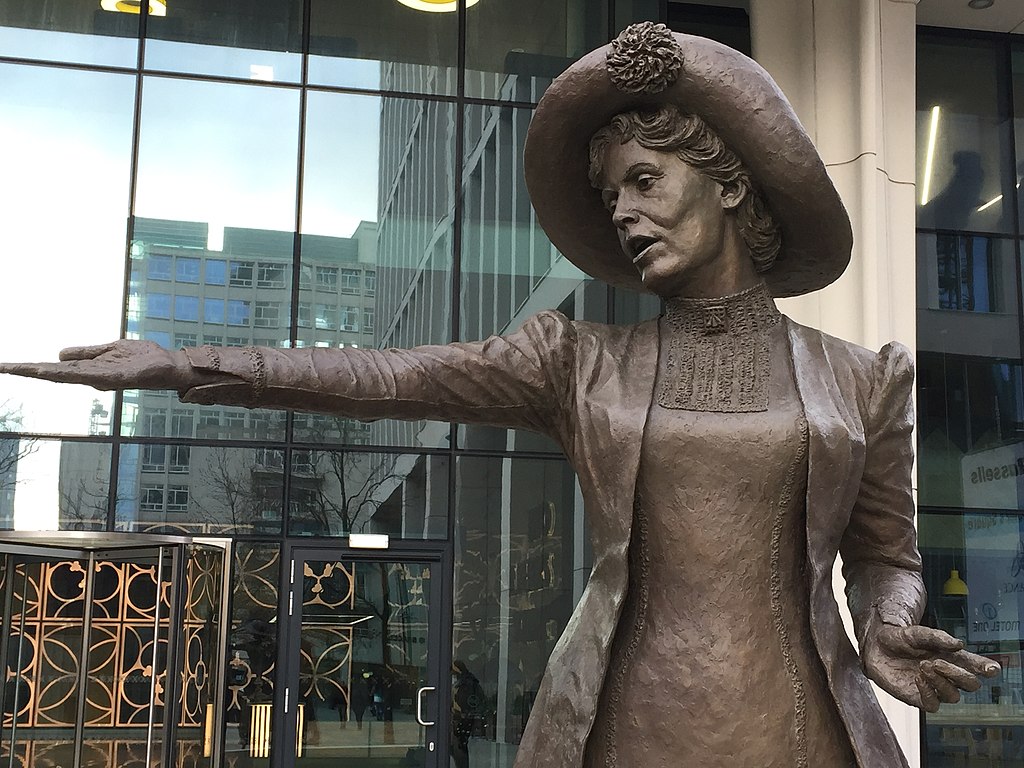
From “Freedom or Death” speech, delivered in Hartford, Connecticut on 13 November 1913, by Emmeline Pankhurst (1858 – 1928), born on this day
 Chorlton Unitarians