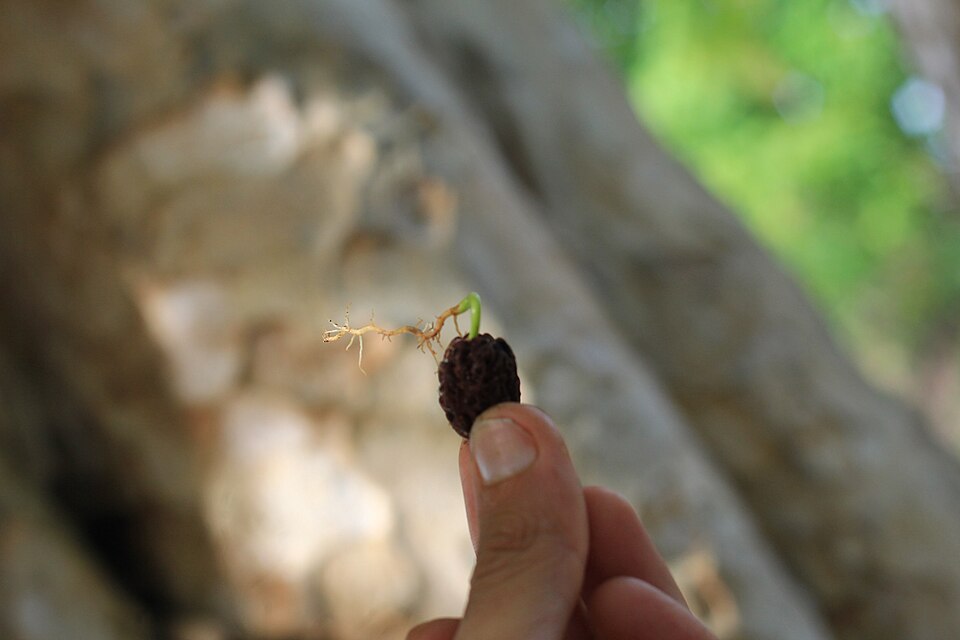
Thought for the day, Wednesday 10th September

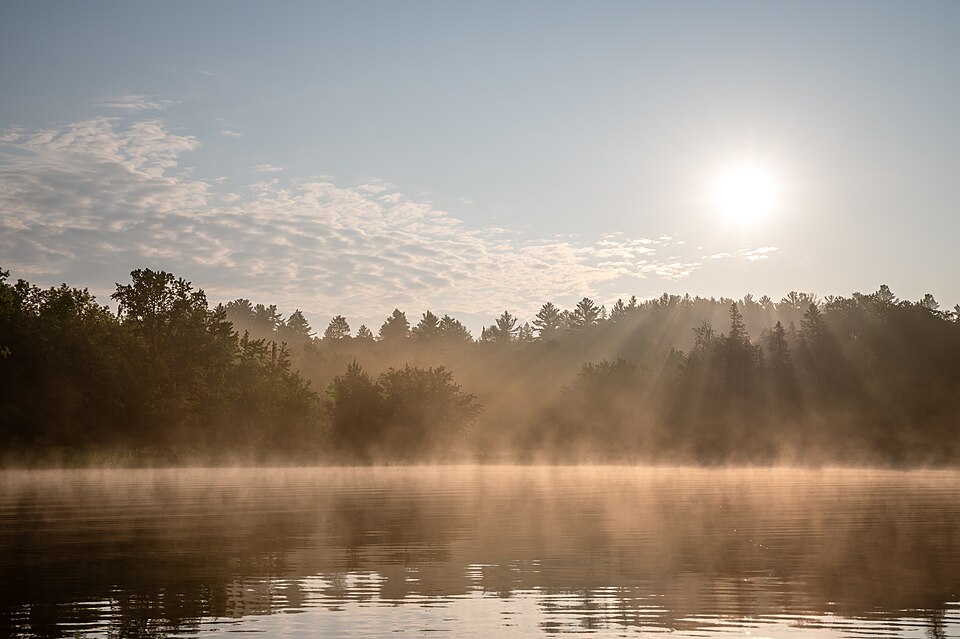
“Animism is the way humanity has been deeply connected to the land and its seasonal cycles for millennia, in rapport and conversation with the animals, plants, elements, ancestors and earth spirits. The opposite of animism is the “cult of the individual” so celebrated in modern society, and the loss of the animist worldview is at the root of our spiritual disconnect and looming ecological crisis. Human beings are just one strand woven into the complex systems of Earth Community, and the animistic perspective is fundamental to the paradigm shift, and the recovery of our own ancestral wisdom.”

Pegi Eyers

Thought for the day, Tuesday 9th September

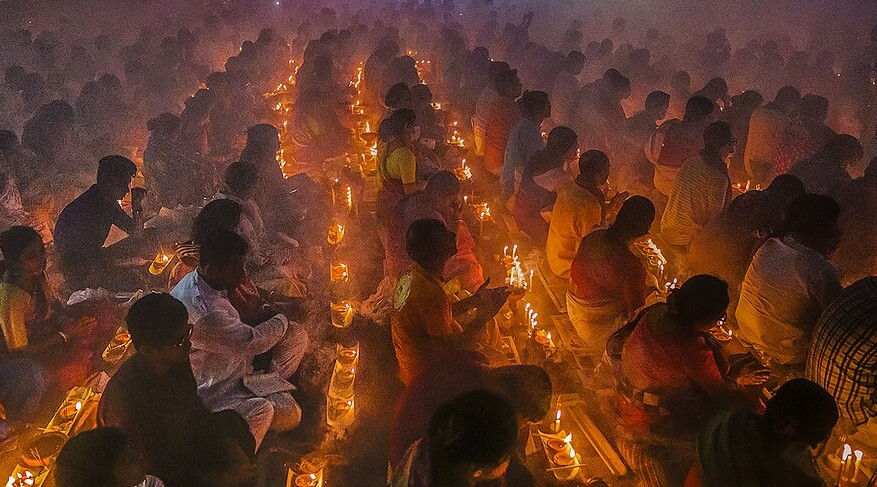
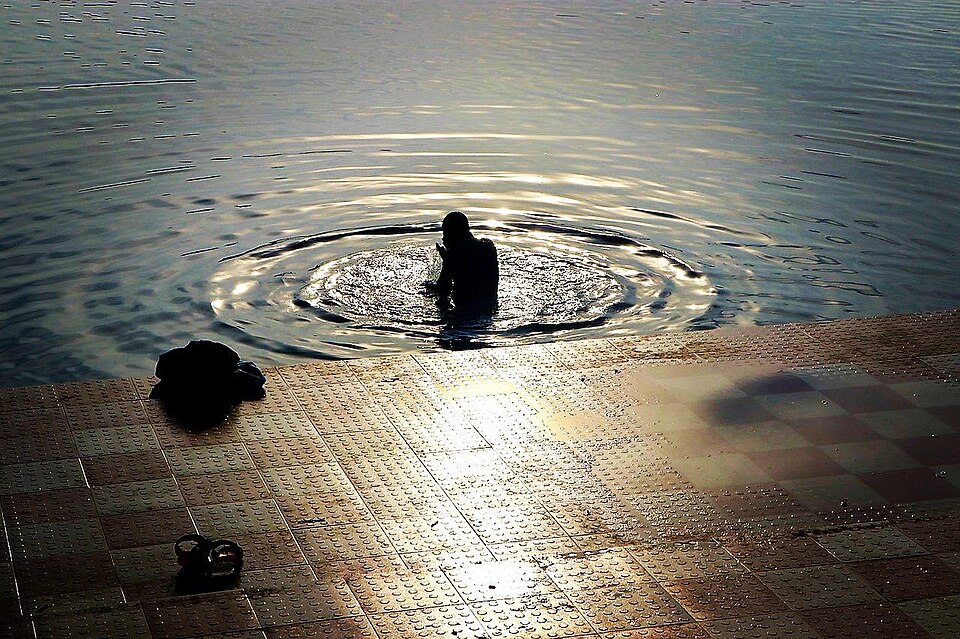
“Perhaps this is the deepest impression left by life in India, the sense of the sacred as something pervading the whole order of nature. Every hill and tree and river is holy, and the simplest human acts of eating and drinking, still more of birth and marriage, have all retained their sacred character… In the West everything has been “profane”; it has been deliberately emptied of religious meaning… It is there that the West needs to learn from the East the sense of the “holy,” of a transcendent mystery which is immanent in everything and which gives an ultimate meaning to life… Then everything is sacred. That is what one finds in India; everything is sacred – eating or drinking or taking a bath; in any of the normal events in life there is always a sacred action… We have lost that awareness… this sacramentality of the universe. The whole creation is pervaded by God.”

Bede Griffiths, aka Swami Dayananda (1906 – 1993), monk and yogi, quoted in Christian Mystics by Matthew Fox

Thought for the day, Monday 8th September

“The quieter we are, the more patient and open we are in our sadnesses, the more deeply and unerringly a new revelation can enter us, and the more we can make it our own. Later on when it “happens” – when it manifests in our response to another person – we will feel it as belonging to our innermost being.”

From Letters to a Young Poet by Rainer Maria Rilke, quoted in A Year with Rilke by Joanna Macy and Anita Barrows

Thought for the day, Sunday 7th September

“Over the infinity of space and time, the infinitely more infinite love of God comes to possess us. He comes at his own time. We have the power to consent to receive him or to refuse. If we remain deaf, he comes back again and again like a beggar, but also, like a beggar, one day he stops coming. If we consent, God puts a little seed in us and he goes away again. From that moment God has no more to do; neither have we, except to wait. … On the whole, however, the seed grows itself. A day comes when the soul belongs to God. When it not only consents to love but when truly and effectively it loves. Then in turn it must cross the universe to go to God.”

Simone Weil (1909 – 1943), French philosopher, mystic and political activist, quoted in Fragments of Holiness for Daily Reflection

Thought for the day, Saturday 6th September

“What after all, has maintained the human race on this old globe despite all the calamities of nature and all the tragic failings of mankind, if not faith in new possibilities, and courage to advocate them.”

Jane Addams, pioneer social worker, women’s suffrage campaigner and pacifist (1860 – 1935), born on this day

Thought for the day, Friday 5th September

International Day of Charity

“When our left hand is injured, our right hand immediately comes to its aid—to caress it and apply medicine if needed. This is because it does not see the left hand as different from itself. If we have spiritual understanding, this is how we will react when we see others suffering.”

Sri Mata Amritanandamayi Devi, known as Amma

Thought for the day, Thursday 4th September

“The reunion of the Christian churches can only come through a rediscovery of the “mystery of Christ” in all its dimensions, and this means that it must be related to the whole history of humanity and of the creation… The narrow-mindedness which has divided the Christian churches from one another, has also divided the Christian religion from other religions. Today we have to open ourselves to the truth in all religions.”

Bede Griffiths, also known as Swami Dayananda (1906 – 1993), monk and yogi, quoted in Christian Mystics by Matthew Fox

Thought for the day, Wednesday 3rd September

“For me it was one of the loveliest of the summer’s hours, and all the details will remain in my memory: that blue September sky, the sounds of wind in the spruces and surf on the rocks, the gulls busy with their foraging, alighting with deliberate grace, the distant views of Griffiths Head and Todd Point, today so clearly etched, though once half seen in swirling fog. But most of all I shall remember the Monarchs, that unhurried westward drift of one small winged form after another, each drawn by some invisible force. We talked a little about their migration, their life history. Did they return? We thought not; for most, at least, this was the closing journey of their lives.

But it occurred to me this afternoon, remembering, that it had been a happy spectacle, that we had felt no sadness when we spoke of the fact that there would no return. And rightly – for when any living thing has come to the end of its life cycle we accept that end as natural.

For the Monarch, that cycle is measured in a known span of months. For ourselves, the measure is something else, the span of which we cannot know. But the thought is the same: when that intangible cycle has run its course it is a natural and not unhappy thing that a life comes to its end.

That is what those brightly fluttering bits of life taught me this morning. I found a deep happiness in it – so, I hope, may you. Thank you for this morning.”

Rachel Carson, 1963 (last letter to a friend after a visit to the mouth of the Sheepscot river in Maine, USA), quoted in Wild Wisdom by Neil Douglas-Klotz

Thought for the day, Monday 1st September

“When we return to the present moment to be in touch with our true home, we no longer discriminate and we no longer have a narrow mind. Our mind is vast, our heart is open, and we embrace and learn from every race, every culture. If young people can open their hearts to learn about other cultures, they will find much goodness, beauty, and enrichment. When we can do that ourselves, we can help those who are stuck to understand and accept people from other cultures. Coming together with openness and acceptance, we can transform hatred, and we contribute to preventing war in our own personal way.”

From Peace Is This Moment: Mindful Reflections for Daily Practice by Thich Nhat Hanh