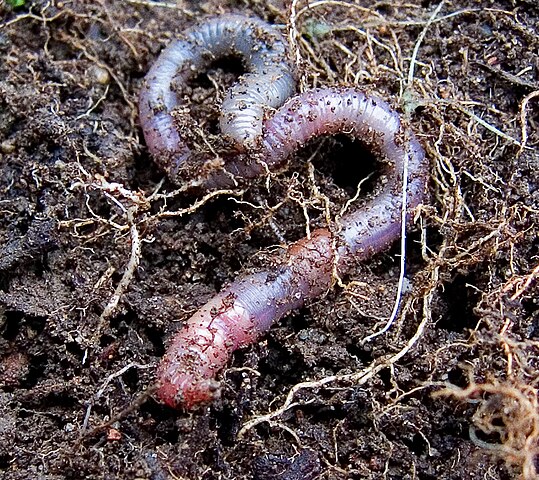
“Believe me, the so-called primitive races who worshipped animals as gods were not so daft as people choose to pretend. At least they were humble. Why should not God have come to the earth as an earth-worm? There are a great many more worms than men, and they do a great deal more good.”
T. H. White, writer (1906 – 1964), born on this day
“In ancient times, knowledge of the tides and seasons was vital, sacred knowledge that kept the tribe in harmony with the laws of nature. The mysteries of sun, moon, and stars that collectively describe the intricate dance of the day, the month, and the year were so important that a whole new class of society sprang up: the sacred clan who, under a variety of names, maintained watchful vigil over these movements that governed the sowing and reaping of crops, the movement of animals, the run of fish. These people were those who had an aptitude for minute and careful observation. They also had an infinite patience that we now find hard to comprehend.
They would watch and record the patterns and cycles every day, every month, every year, over a whole lifetime. Their work was continued by their offspring into many generations, until eventually the vast workings of the cosmos formed meaningful shapes and patterns. Over the centuries, their observations would result in the erection of stone circles and megaliths, each stone sited according to their observations. It was said of St. Columba that he could understand the harmonious dance of the moon and sun, read the tides of the sea, and enumerate the stars of heaven. This alone is proof that as late as the sixth century, the foundation lore of the sacred clan was being passed down.
Today, though we possess tide tables, calendars, and ephemerides with which to track the seas, the days, and the movements of the heavens, the sacred knowledge of their mysteries is own own special heritage.”
From The Celtic Spirit: Daily Meditations for the Turning Year by Caitlin Matthews
Second place in the IAU OAE Astrophotography Contest, category Star trails: Stone Star Circles, Startrails above Stonehenge, by Till Credner, Germany. Astronomy is one of the oldest (if not the oldest) of the sciences, and as such has connection to various cultures over millennia. This image in a way conveys this relationship by being contextualised in Stonehenge. There is much research into what astronomers call archeoastronomy sites, and how they connect to the sky (for example, seasons, phases of the moon and much more). Civilizations across time and from all over the world have their own views and interpretations of what they see in the sky, and this has been tied not only to culture but also to the people’s day-to-day and seasonal activities. The “concentric circles” which are often referred to as “star trails”, are the result of the apparent motion of the sky, which is in reality due to the rotation of the Earth on its axis. The small dot appearing towards the top center of the image is Polaris – The North or Pole Star. Polaris is only visible to observers in the Northern latitudes. The height of the Pole Star can be used to infer the observer’s actual latitude. Stonehenge is located at around 51° North. This image is taken from one of the most notable ancient sites in the world, brings us back in time, and makes us wonder about the stories told by the people that lived in that place many millennia ago.
“Mankind has gone very far into an artificial world of his own creation. He has sought to insulate himself, in his cities of steel and concrete, from the realities of earth and water and the growing seed. Intoxicated with a sense of his own power, he seems to be going farther and farther into more experiments for the destruction of himself and his world. There is certainly no single remedy for this condition and I am offering no panacea. But it seems reasonable to believe — and I do believe — that the more clearly we can focus our attention on the wonders and realities of the universe about us the less taste we shall have for the destruction of our race. Wonder and humility are wholesome emotions, and they do not exist side by side with a lust for destruction.”
Rachel Carson (1907 – 1964), biologist and conservationist, born on this day
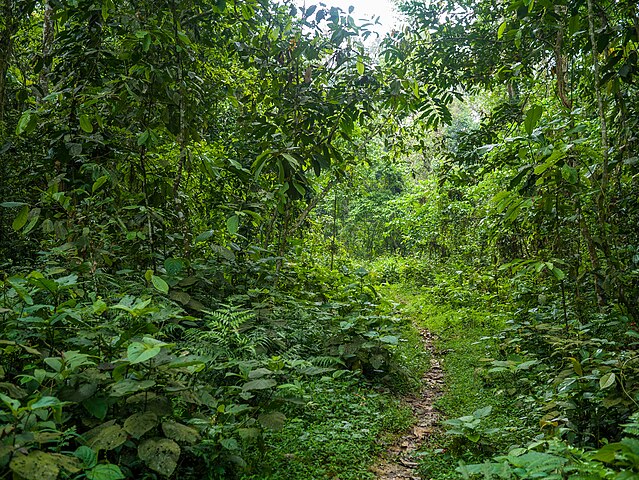
“Come home to the forest Where time goes slow, and breath is mellow. Where thoughts find rest, and calm comes to nest. Come home to the woods to be friends with trees, and listen to the breeze. To wander through trails, and mend your sails. Come home to nature, When your heart is hurting, or your soul needs healing. When something feels wrong, or you just need place to belong. The forest awaits Come home. Be healed.”
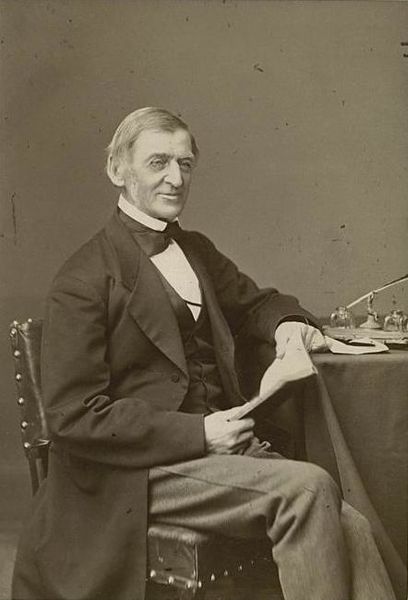
“Abundance is not a result you create. It is an existing state you recognize. We ask for long life, but ‘tis deep life, or noble moments, that signify. Let the measure of time be spiritual, not mechanical.”
From Society and Solitude by Ralph Waldo Emerson (1803 – 1882), born on this day
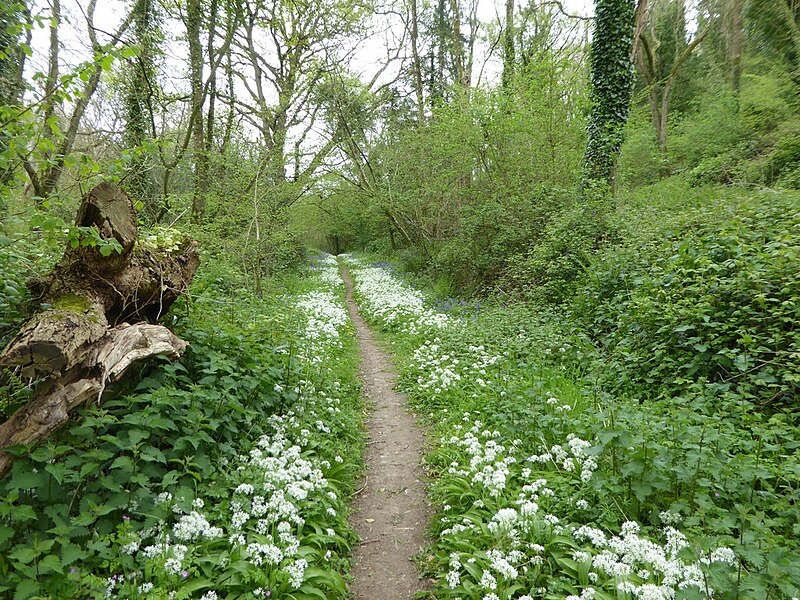
“Where do we go, when we’re lost – when the humans around us (much as we love them) can’t seem to help us? We go where we’ve been taught to forget to go. Where our ancestors have always gone. To the woods and the old ways. To the hedgelands and edgelands; to the threshold places and liminal zones. We go looking for the Others who dwell there; we go listening for the murmurs of the dreaming land. We go looking for a wisdom that’s wilder and wiser than our own.”
“Might the simple maxim, that honesty is the best policy be laid to heart! Might a sense of the true aims of life elevate the tone of politics and trade, till public and private honor become identical!”
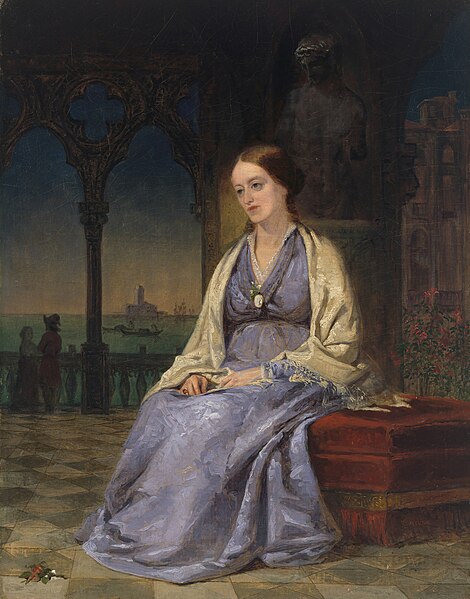
From Summer on the Lakes by Margaret Fuller (1810 – 1850), Unitarian feminist and journalist, born on this day
“The heart that has learned to love feels sorry for every created thing… Once I needlessly killed a fly. The poor thing crawled on the ground, hurt and mangled, and for three whole days I wept over my cruelty to a living creature, and to this day the incident remains in my memory… The Spirit of God teaches the soul to love every living thing so that she would have no harm come to even a green leaf on a tree, or trample underfoot a flower of the field. Thus the Spirit of God teaches love towards all, and the soul feels compassion for every being.”
“Tea is an act complete in its simplicity. When I drink tea, there is only me and the tea. The rest of the world dissolves. There are no worries about the future. No dwelling on past mistakes. Tea is simple: loose-leaf tea, hot pure water, a cup. I inhale the scent, tiny delicate pieces of the tea floating above the cup. I drink the tea, the essence of the leaves becoming a part of me. I am informed by the tea, changed. This is the act of life, in one pure moment, and in this act the truth of the world suddenly becomes revealed: all the complexity, pain, drama of life is a pretense, invented in our minds for no good purpose. There is only the tea, and me, converging.”
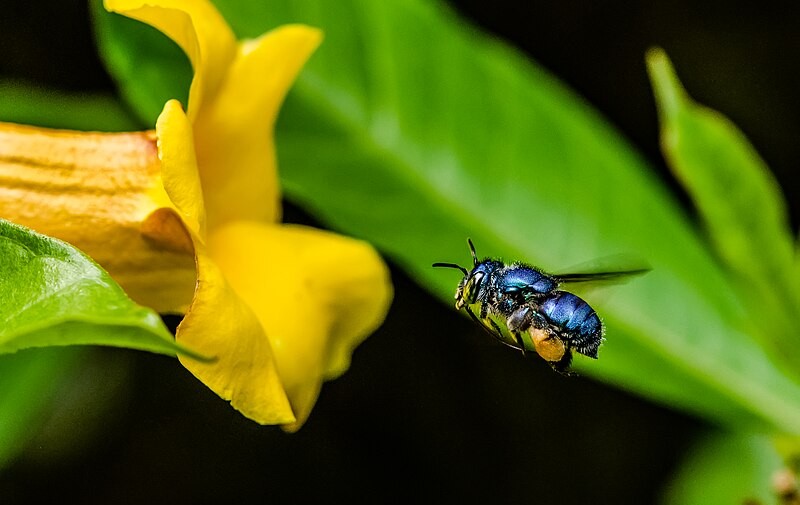
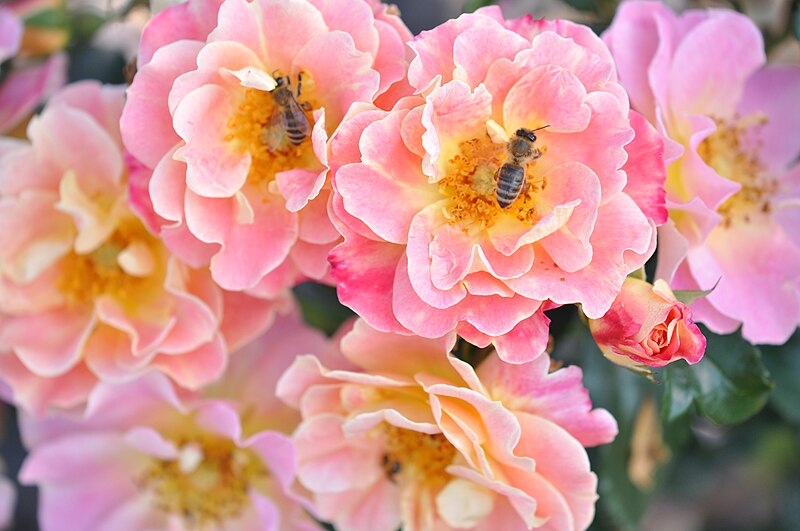
“What is this dark hum among the roses? The bees have gone simple, sipping, that’s all. What did you expect? Sophistication? They’re small creatures and they are filling their bodies with sweetness, how could they not moan in happiness? The little worker bee lives, I have read, about three weeks. Is that long? Long enough, I suppose, to understand that life is a blessing. I have found them-haven’t you?— stopped in the very cups of the flowers, their wings a little tattered-so much flying about, to the hive, then out into the world, then back, and perhaps dancing, should the task be to be a scout-sweet, dancing bee. I think there isn’t anything in this world I don’t admire. If there is, I don’t know what it is. I haven’t met it yet. Nor expect to. The bee is small, and since I wear glasses, so I can see the traffic and read books, I have to take them off and bend close to study and understand what is happening. It’s not hard, it’s in fact as instructive as anything I have ever studied. Plus, too, it’s love almost too fierce to endure, the bee nuzzling like that into the blouse of the rose. And the fragrance, and the honey, and of course the sun, the purely pure sun, shining, all the while, over all of us.”




 Chorlton Unitarians