“Ours is essentially a tragic age, so we refuse to take it tragically. The cataclysm has happened, we are among the ruins, we start to build up new little habitats, to have new little hopes. It is rather hard work: there is now no smooth road into the future: but we go round, or scramble over the obstacles. We’ve got to live, no matter how many skies have fallen.”
From Lady Chatterley’s Lover by D. H. Lawrence, unexpurgated edition published in the UK on this day in 1960
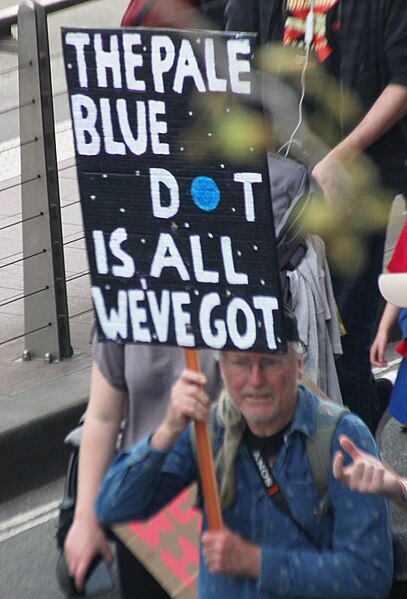
“Look again at that dot. That’s here. That’s home. That’s us. On it everyone you love, everyone you know, everyone you ever heard of, every human being who ever was, lived out their lives. The aggregate of our joy and suffering, thousands of confident religions, ideologies, and economic doctrines, every hunter and forager, every hero and coward, every creator and destroyer of civilization, every king and peasant, every young couple in love, every mother and father, hopeful child, inventor and explorer, every teacher of morals, every corrupt politician, every “superstar,” every “supreme leader,” every saint and sinner in the history of our species lived there-on a mote of dust suspended in a sunbeam.
The Earth is a very small stage in a vast cosmic arena. Think of the rivers of blood spilled by all those generals and emperors so that, in glory and triumph, they could become the momentary masters of a fraction of a dot.Think of the endless cruelties visited by the inhabitants of one corner of this pixel on the scarcely distinguishable inhabitants of some other corner, how frequent their misunderstandings, how eager they are to kill one another, how fervent their hatreds.
Our posturings, our imagined self-importance, the delusion that we have some privileged position in the Universe, are challenged by this point of pale light. Our planet is a lonely speck in the great enveloping cosmic dark. In our obscurity, in all this vastness, there is no hint that help will come from elsewhere to save us from ourselves.
The Earth is the only world known so far to harbor life. There is nowhere else, at least in the near future, to which our species could migrate. Visit, yes. Settle, not yet. Like it or not, for the moment the Earth is where we make our stand.
It has been said that astronomy is a humbling and character-building experience. There is perhaps no better demonstration of the folly of human conceits than this distant image of our tiny world. To me, it underscores our responsibility to deal more kindly with one another, and to preserve and cherish the pale blue dot, the only home we’ve ever known.”
From Pale Blue Dot: A Vision of the Human Future in Space (1994) by Carl Sagan (1934 – 1996), born on this day
“In the light, the earth remains our first and our last love. Our brothers are breathing under the same sky as we; justice is a living thing. Now is born that strange joy which helps one live and die, and which we shall never again postpone to a later time.”
From The Rebel (1951) by Albert Camus (1913 – 1960), born on this day
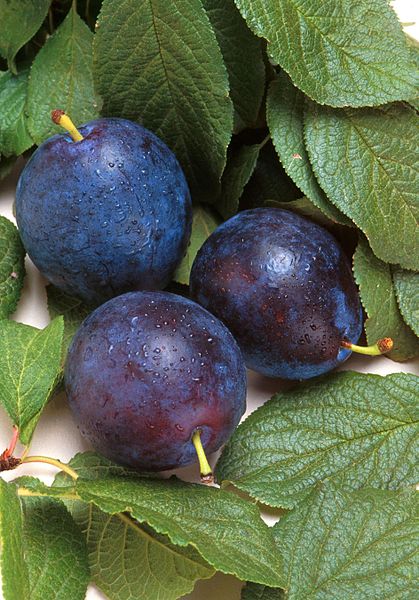
“My work is loving the world. Here the sunflowers, there the hummingbird— equal seekers of sweetness. Here the quickening yeast; there the blue plums. Here the clam deep in the speckled sand. Are my boots old? Is my coat torn? Am I no longer young, and still half-perfect? Let me keep my mind on what matters, which is my work, which is mostly standing still and learning to be astonished. The phoebe, the delphinium. The sheep in the pasture, and the pasture. Which is mostly rejoicing, since all the ingredients are here, which is gratitude, to be given a mind and a heart and these body-clothes, a mouth with which to give shouts of joy to the moth and the wren, to the sleepy dug-up clam, telling them all, over and over, how it is that we live forever.”
“To love. To be loved. To never forget your own insignificance. To never get used to the unspeakable violence and the vulgar disparity of life around you. To seek joy in the saddest places. To pursue beauty to its lair. To never simplify what is complicated or complicate what is simple. To respect strength, never power. Above all, to watch. To try and understand. To never look away. And never, never, to forget… another world is not only possible, she is on her way. On a quiet day, I can hear her breathing.”
Arundhati Roy
Lone mangrove tree with reflection, Ashtamudi Lake, Kollam, Kerala, India
“Doubt can serve you well, if you train it. It must become a way of knowing, a good critic. Every time doubt wants to spoil something for you, ask why it finds something ugly and demand proofs. Thus tested by you, doubt may become bewildered and embarrassed, even aggressive. But don’t give in, demand reasons and be persistent and attentive every single time, and the day will come when, instead of a destroyer, he will become one of your best servants – perhaps one of the most intelligent of those who will help you build your life.”
From Letters to a Young Poet by Rainer Maria Rilke, 4 November 1904
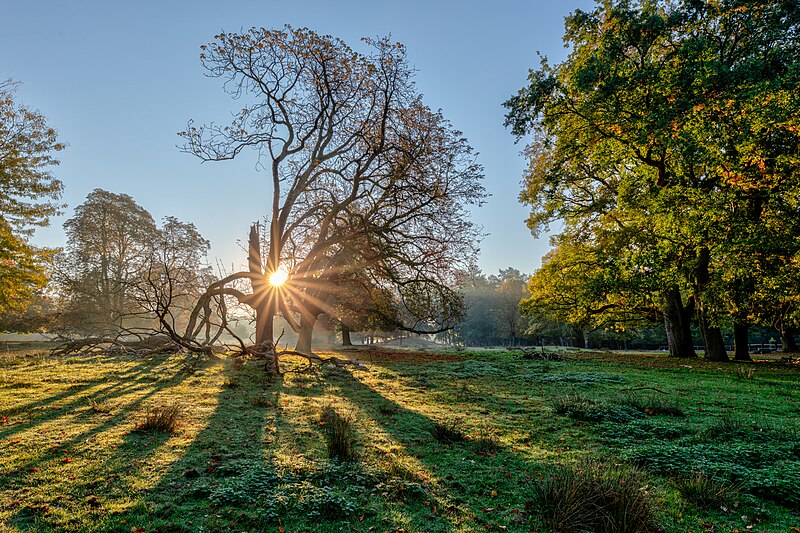
“I have seen the sun break through to illuminate a small field for a while, and gone my way and forgotten it. But that was the pearl of great price, the one field that had treasure in it. I realise now that I must give all that I have to possess it. Life is not hurrying on to a receding future, nor hankering after an imagined past. It is the turning aside like Moses to the miracle of the lit bush, to a brightness that seemed as transitory as your youth once, but is the eternity that awaits you.”
From The Bright Field by R. S. Thomas (1913 – 2000)
“Nothing you love is lost. Not really. Things, people—they always go away, sooner or later. You can’t hold them, any more than you can hold moonlight. But if they’ve touched you, if they’re inside you, then they’re still yours. The only things you ever really have are the ones you hold inside your heart.”
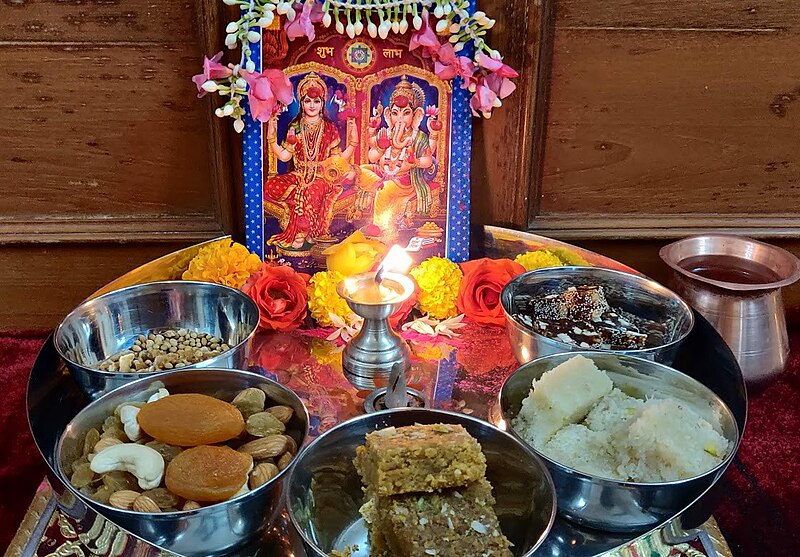
“Om Jai Lakshmi Goddess born from the struggle between good and evil Guide us toward the light. In a world where plenty is possible, Let us end hunger, thirst and homelessness. In your nurturing hands, Let us seek refuge from want, fear and violence. With your grace, Let our world be reborn in your image, Where all needs are met, Where morality and love are abundant, And whereby we are free. Om Jai Lakshmi. Om Shanti, Shanti, Shanti.”





 Chorlton Unitarians