“Don’t trust in your reputation, money, or position, but in the strength that is yours – namely, your judgments about the things that you control and don’t control. For this alone is what makes us free and unfettered, that picks us up by the neck from the depths and lifts us eye to eye with the rich and powerful.”
“This is the very thing which makes up the virtue of the happy person and a well-flowing life – when the affairs of life are in every way tuned to the harmony between the individual divine spirit and the will of the director of the universe.”
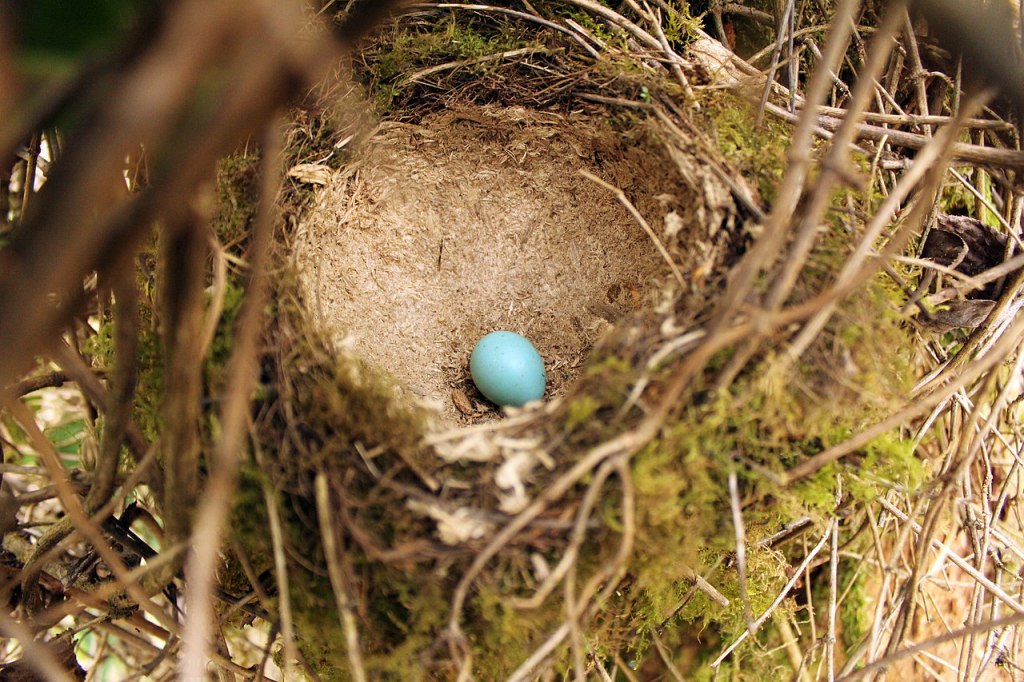
“This is the work of the Sabbath. All creatures flowering out of themselves, a rose, star pollen galaxy, blue-green egg in a well woven nest, the little earth in its swirl of distances. This the work of the effortless. A prophet does not see into the future. A prophet sees deeply into the present moment.”
“Drifter, on your feet, get moving! You still have time, go look for the Friend. Make yourself wings, take wing and fly. You still have time, go look for the Friend.
Charge your bellows with breath like the blacksmith taught you. That’s how you turn your iron to gold. You still have time, go look for the Friend…
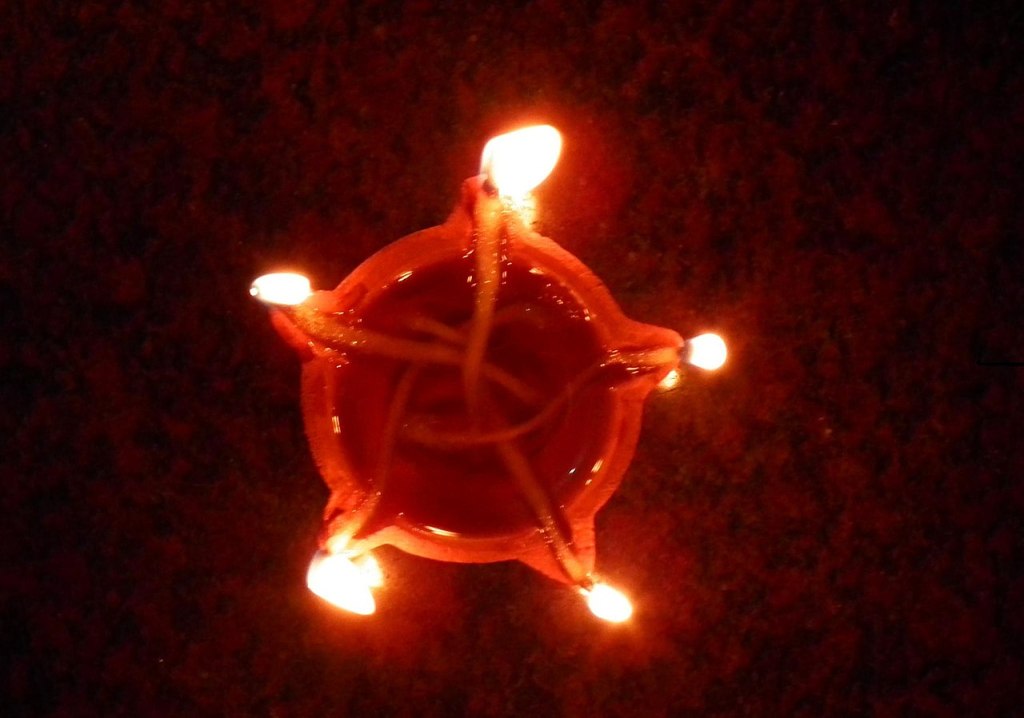
I trapped my breath in the bellows of my throat: a lamp blazed up inside, showed me who I really was. I crossed the darkness holding fast to that lamp, scattering its light-seeds around me as I went.
Wear the robe of wisdom, brand Lalla’s words on your heart, lose yourself in the soul’s light, you too shall be free.”
“As we slowly tread towards winter, let us learn how to befriend darkness. May we find our way in the night and welcome the shapes we see. Let us honour the voices of our ancestors, and the faces of friends lost through death or conflict. May we hear their whispers of wisdom, of laughter and of love. May their courage to live life fully provide energy for our dance on the edge of fear.”
John Harley, Unitarian minister, quoted in Fragments of Holiness for Daily Reflection
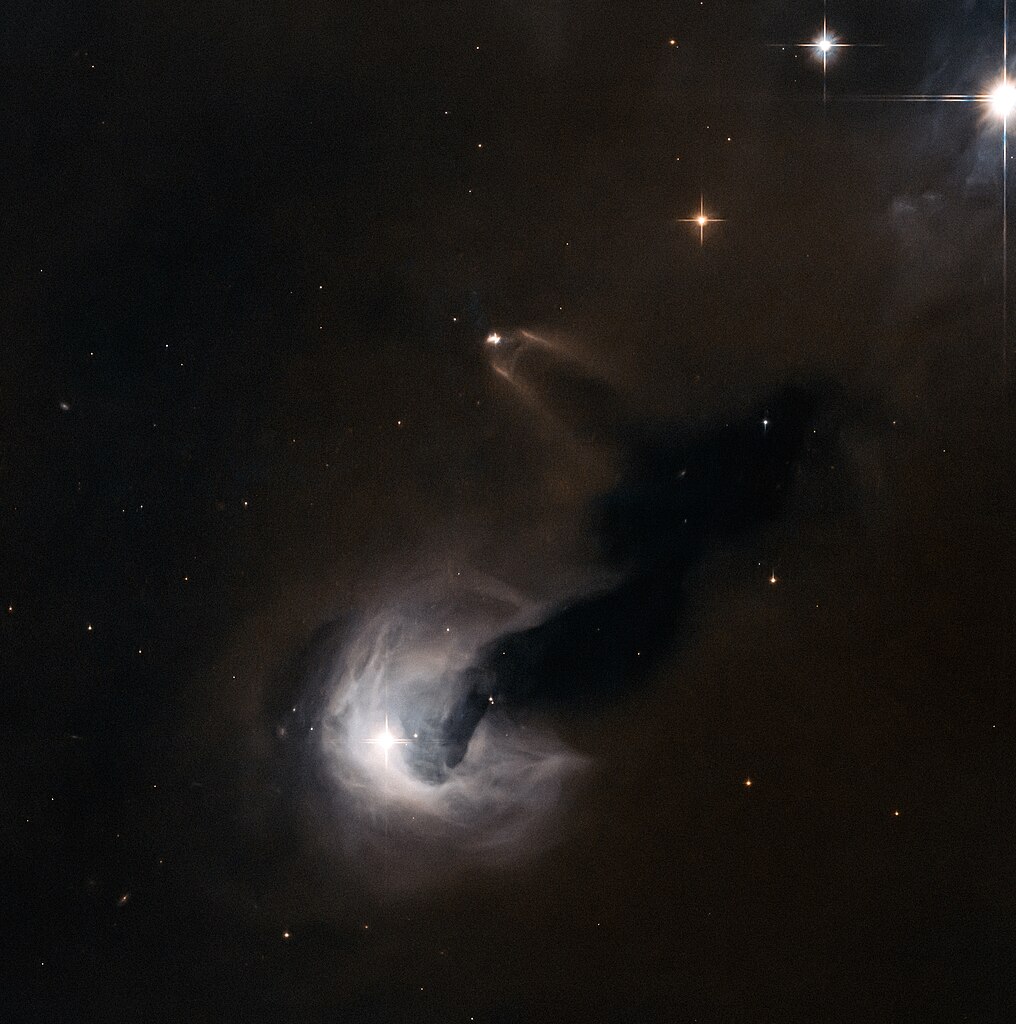
This new NASA/ESA Hubble Space Telescope image shows a variety of intriguing cosmic phenomena. Surrounded by bright stars, towards the upper middle of the frame we see a small young stellar object (YSO) known as SSTC2D J033038.2+303212. Located in the constellation of Perseus, this star is in the early stages of its life and is still forming into a fully grown star. In this view from Hubble’s Advanced Camera for Surveys (ACS) it appears to have a murky chimney of material emanating outwards and downwards, framed by bright bursts of gas flowing from the star itself. This fledgling star is actually surrounded by a bright disc of material swirling around it as it forms — a disc that we see edge-on from our perspective. However, this small bright speck is dwarfed by its cosmic neighbour towards the bottom of the frame, a clump of bright, wispy gas swirling around as it appears to spew dark material out into space. The bright cloud is a reflection nebula known as [B77] 63, a cloud of interstellar gas that is reflecting light from the stars embedded within it. There are actually a number of bright stars within [B77] 63, most notably the emission-line star LkHA 326, and its very near neighbour LZK 18. These stars are lighting up the surrounding gas and sculpting it into the wispy shape seen in this image. However, the most dramatic part of the image seems to be a dark stream of smoke piling outwards from [B77] 63 and its stars — a dark nebula called Dobashi 4173. Dark nebulae are incredibly dense clouds of pitch-dark material that obscure the patches of sky behind them, seemingly creating great rips and eerily empty chunks of sky. The stars speckled on top of this extreme blackness actually lie between us and Dobashi 4173. Link Hubble’s Advanced Camera for Surveys
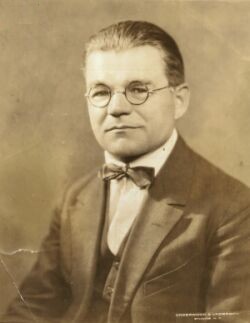
“My life is made worthwhile by fighting bravely on for those ideals I hold most great and holy. Though evil winds may blow, they will not rock the calm in my soul, which remains both quiet and lowly. For heaven waits for those whose spirits have won through, but I am sure that my life was worth living. And they will find the sun whose minds have let them rise and stand against the darkness and the mayhem. I might be disappointed, I might fall in the fight, but I am sure that my life was worth living. The life which is to come has been my holy shrine, I trust that I have lived a life worth giving.”
My Life Is Made Worthwhile: a hymn written by Norbert Fabian Čapek on March 31 1942 at the concentration camp in Dachau, Germany. Norbert was a Unitarian minister who founded the Unitarian church in Prague and was executed by the Nazis for treason.
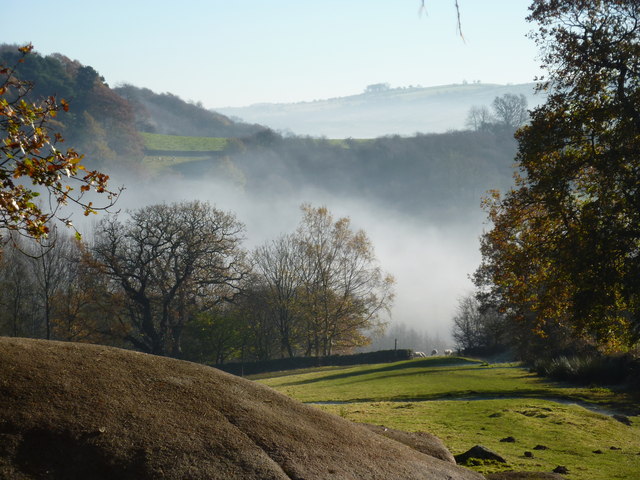
“Season of mists and mellow fruitfulness, Close bosom-friend of the maturing sun; Conspiring with him how to load and bless With fruit the vines that round the thatch-eves run; To bend with apples the moss’d cottage-trees, And fill all fruit with ripeness to the core; To swell the gourd, and plump the hazel shells With a sweet kernel; to set budding more, And still more, later flowers for the bees, Until they think warm days will never cease, For summer has o’er-brimm’d their clammy cells.
Who hath not seen thee oft amid thy store? Sometimes whoever seeks abroad may find Thee sitting careless on a granary floor, Thy hair soft-lifted by the winnowing wind; Or on a half-reap’d furrow sound asleep, Drows’d with the fume of poppies, while thy hook Spares the next swath and all its twined flowers: And sometimes like a gleaner thou dost keep Steady thy laden head across a brook; Or by a cyder-press, with patient look, Thou watchest the last oozings hours by hours.
Where are the songs of spring? Ay, Where are they? Think not of them, thou hast thy music too,— While barred clouds bloom the soft-dying day, And touch the stubble-plains with rosy hue; Then in a wailful choir the small gnats mourn Among the river sallows, borne aloft Or sinking as the light wind lives or dies; And full-grown lambs loud bleat from hilly bourn; Hedge-crickets sing; and now with treble soft The red-breast whistles from a garden-croft; And gathering swallows twitter in the skies.”
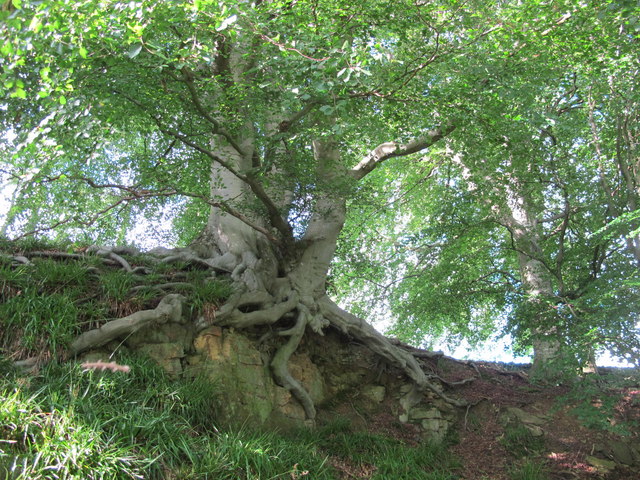
“Wherever we have set our roots, there will we grow. The ability to be flexible and adaptable to different growing conditions determines the nature of our development. Learning to change and adapt with each new circumstance is a human gift that we share with all life. Evolution itself shows us that those species that cannot change die out. Opinions and attitudes can become like carapaces that harden about our shoulders, bringing rigidity to our life-flow. Rigidity of opinion causes us to become approachable, which may increase our sense of isolation or confirm us in our self-contented stasis. We begin to lose opportunities to exchange views, to receive love, to find other sources of nurture. It takes courage to allow children to swarm in our branches, to allow the questions and opinions of those younger than ourselves to bend our trunks in their fresh breeze. The beauty of many-levelled generations alive at one time allows us great opportunities to practice our flexibility and share our wisdom.”
“When a mother lives in the street and sleeps on the pavement in front of your brownstone you need many laws to keep you safe. They all say the same thing, “Stay away.” But when you invite her inside, you recognize, indeed, she is your mother, the one who brings this breath. She sits down by the hearth where your grief is burning and you give her something warm to sip from the old iron cauldron you’ve carefully kept from beating too hard, like your heart. You notice, indeed, there are many cracks in it now. And you remember, it was she who gave you this bowl, just as her mother gave it to her. Then you discover the only one law is required, the one that says to every stranger, “Welcome home.””
“To separate between physical needs and spiritual needs is both counterproductive and futile. The spiritual breathes life into the physical and the physical rises to become spiritual in a perpetual chemistry of exchange. Heal the soul and the body is renewed. Heal the body and the soul is empowered.”


 Chorlton Unitarians