“God is not a watchmaker who then periodically tinkers with the creation he long ago established. Instead, God is one with all that exists. The great miracle is the energizing force of the universe itself. One mind is everywhere active, in each ray of the star, in each wavelet of the pool.”
Ralph Waldo Emerson (1803 – 1882), Unitarian minister, writer and philosopher, quoted in Fragments of Holiness for Daily Reflection
“Though human nature has many detractors, and though we fail our own best intentions sometimes, the treasury of the soul reflects its divine origins time and again in our life’s track. True divinity of soul shines out in the most unexpected moments: when we are hard-pressed, when care and support must stretch just a little further than we think we can give, when the moment of danger comes unexpectedly, when a deeper and more farsighted action is required of us. The invisible mantle of the Divine is about our shoulders and can lend us help and strength in daily life. The divine ingredients within our making do not make us into gods, but they do sparkle through our human lives in ways that illumine the universe.”
From The Celtic Spirit: Daily Meditations for the Turning Year by Caitlin Matthews
“To understand the world, knowledge is not enough. You must see it, touch it, live in its presence and drink the vital heat of existence in the very heart of reality.”
Pierre Teilhard de Chardin (1881 – 1955), Jesuit priest, paleontologist and theologian
“I quietly gaze into the depths of a forest and see nothing save beauty and peace. Birdsong fills my ears. A gentle breeze brushes against my cheek. Seeing from inside the seeing, I drink the dark riches of the woods.
Would it be that every day I could see my own face so clearly in these still waters, And meet the emptiness – which is also my very own heart – that is carried in the boughs of pines and the gentle music of crickets.”
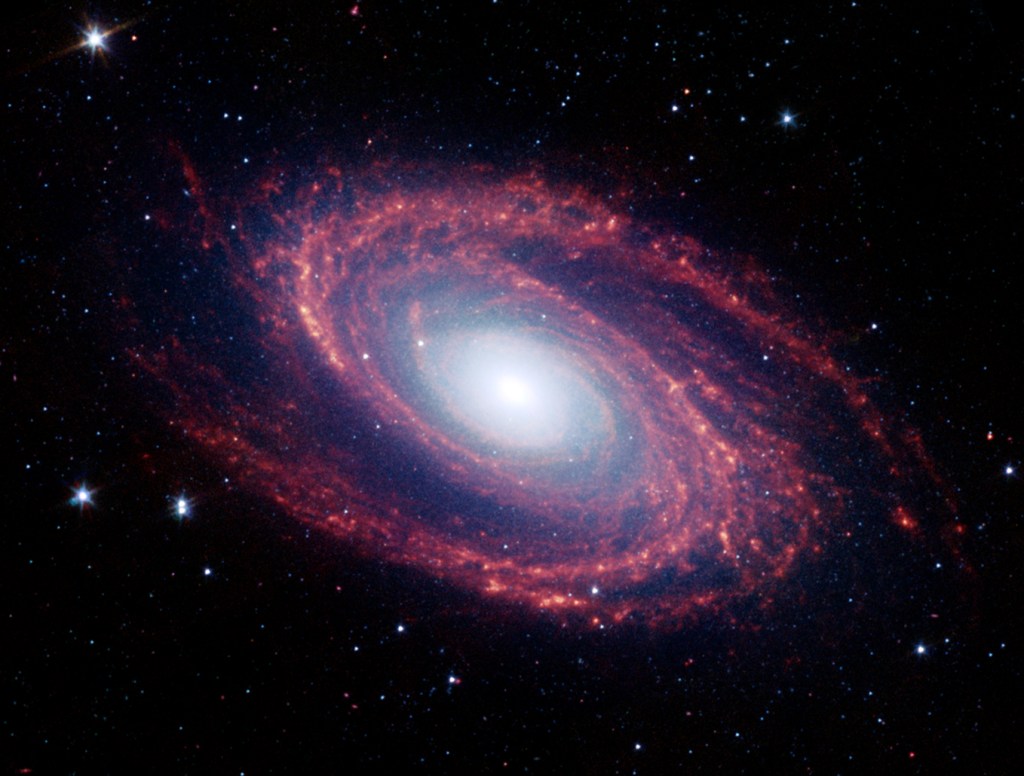
“Every unique thing in nature is related to the whole, and partakes of the perfection of the whole. Each particle is a microcosm, and faithfully renders the likeness of the world. In geometric harmony of the cosmos there are ways that resemble, there are universal patterns, from blood vessels, to winter trees or to a river delta, from nautilus shell to spiral galaxy, from neurons in the brain to the cosmic web. A whole universe of connections is in your mind – a universe within a universe – and one capable of reaching out to the other that gave rise to it. Billions of neurons touching billions of stars – surely spiritual.”
“Please bring strange things. Please come bringing new things. Let very old things come into your hands. Let what you do not know come into your eyes. Let desert sand harden your feet. Let the arch of your feet be the mountains. Let the path of our fingertips be your maps and the ways you go be the lines of your palms. Let there be deep snow in your inbreathing and your outbreath be the shining of ice. May your mouth contain the shapes of strange words. May you smell food cooking you have not eaten. May the spring of a foreign river be your navel. May your soul be at home where there are no houses. Walk carefully, well loved one, walk mindfully, well loved one, walk fearlessly, well loved one, Return with us, return to us, be always coming home.”
Initiation Song from the Finders Lodge by Ursula K. Le Guin
“Action that is in accordance with duty, performed without attachment and aversion, and done without desire for rewards, is action in the mode of goodness.”
Bhagavad Gita (Song of God) 18:23, composed in India in around 200 BCE
International Day of the World’s Indigenous Peoples
“In a culture of gratitude, everyone knows that gifts will follow the circle of reciprocity and flow back to you again. This time you give and next time your receive. Both the honour of giving and the humility of receiving are necessary halves of the equation. The grass in the ring is trodden down in a path from gratitude to reciprocity. We dance in a circle, not in a line… We are all bound by a covenant of reciprocity: plant breath for animal breath, winter and summer, predator and prey, grass and fire, night and day, living and dying. Water knows this, clouds know this. Soil and rocks know they are dancing in a continuous giveaway of making, unmaking, and making again the earth… The moral covenant of reciprocity calls us to honour our responsibilities for all we have been given, for all that we have taken… Gifts of mind, hands, heart, voice, and vision all offered up on behalf of the earth. Whatever our gift, we are called to give it and to dance for the renewal of the world. In return for the privilege of breath.”
From Braiding Sweetgrass by Robin Wall Kimmerer, Professor of Environmental Biology and enrolled member of the Citizen Potawatomi Nation
The meeting of day and night in a mountain valley with wonderful gold light on a hills and bright stars in a sky.






 Chorlton Unitarians