“Although we may see 1,000 suns reflected in 1,000 pots of water, there is only one sun. When we see the consciousness within all of us as one and the same, we will be able to develop a mind that considers the needs of others before our own.”
‘I’m lying on the ground looking up at the branches of an oak tree. Dappled light is shining through the canopy, the leaves whisper ancient incantations. This tree, in its living stage, rooted in sights and sounds that I’ll never know, has witnessed extinctions and wars, loves and losses. I wish we could translate the language of trees – hear their voices, know their stories. They host such an astonishing amount of life – there are thousands of species harbouring in and on and under this mighty giant. And I believe trees are like us, or they inspire the better parts of human nature. If only we could be connected in the way this oak tree is connected with its ecosystem.’
“Come when the nights are bright with stars Or when the moon is mellow; Come when the sun his golden bars Drops on the hay-field yellow. Come in the twilight soft and gray, Come in the night or come in the day, Come, O love, whene’er you may, And you are welcome, welcome. You are sweet, O Love, dear Love, You are soft as the nesting dove. Come to my heart and bring it rest As the bird flies home to its welcome nest. Come when my heart is full of grief Or when my heart is merry; Come with the falling of the leaf Or with the redd’ning cherry. Come when the year’s first blossom blows, Come when the summer gleams and glows, Come with the winter’s drifting snows, And you are welcome, welcome.”
Paul Laurence Dunbar (one of the first influential African American poets), born on this day in 1872
“O Marvel, a garden among the flames! My heart can take on any form: a meadow for gazelles, a cloister for monks, For the idols, sacred ground, Ka’ba for the circling pilgrim, the tables of the Torah, the scrolls of the Qur’ān. I profess the religion of love; wherever its caravan turns along the way, that is the belief, the faith I keep.”
“My Beloved is in the mountains, And lonely wooded valleys, Strange islands, And resounding rivers, The whistling of love-stirring breezes, The tranquil night At the time of the rising dawn, Silent music, Sounding solitude, The supper that refreshes, And deepens love.”
“Because we live in the browning season the heavy air blocking our breath, and in this time when living is only survival, we doubt the voices that come shadowed on the air, that weave within our brains certain thoughts, a motion that is soft, imperceptible, a twilight rain, soft feather’s fall, a small body dropping into its nest, rustling, murmuring, settling in for the night.
Because we live in the hard-edged season, where plastic brittle and gleaming shines and in this space that is cornered and angled, we do not notice wet, moist, the significant drops falling in perfect spheres that are the certain measures of our minds; almost invisible, those tears, soft as dew, fragile, that cling to leaves, petals, roots, gentle and sure, every morning.
We are the women of daylight; of clocks and steel foundries, of drugstores and streetlights, of superhighways that slice our days in two. Wrapped around in glass and steel we ride our lives; behind dark glasses we hide our eyes, our thoughts, shaded, seem obscure, smoke fills our minds, whisky husks our songs, polyester cuts our bodies from our breath, our feet from the welcoming stones of earth. Our dreams are pale memories of themselves, and nagging doubt is the false measure of our days.
Even so, the spirit voices are singing, their thoughts are dancing in the dirty air. Their feet touch the cement, the asphalt delighting, still they weave dreams upon our shadowed skulls, if we could listen. If we could hear. Let’s go then. Let’s find them. Let’s listen for the water, the careful gleaming drops that glisten on the leaves, the flowers. Let’s ride the midnight, the early dawn. Feel the wind striding through our hair. Let’s dance the dance of feathers, the dance of birds.”
Paula Gunn Allen (1939 – 2008), Laguna Pueblo writer
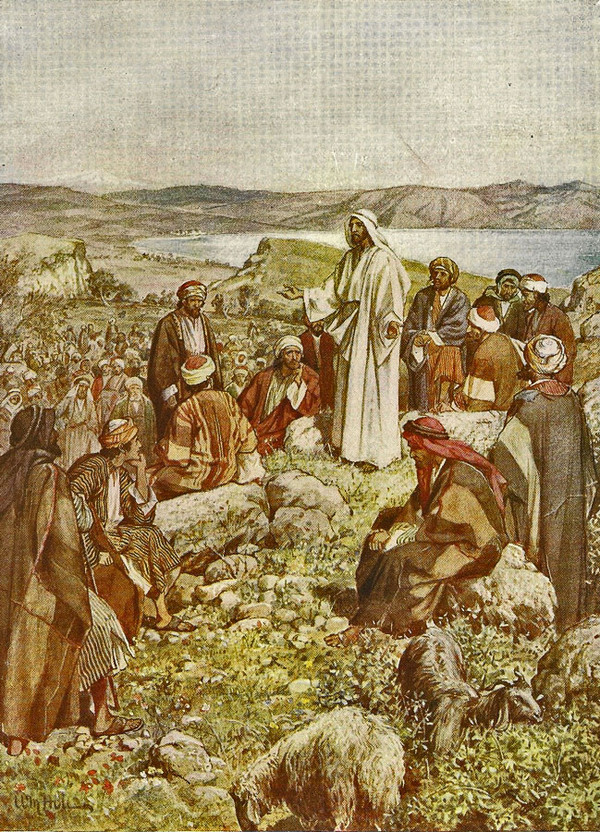
“Strange to say, the Sermon on the Mount gives pretty precise instructions on how to construct an outlook that could lead to an Economics of Survival.
How blessed are those who know that they are poor: the kingdom of Heaven is theirs. How blessed are the sorrowful; They shall find consolation. How blessed are those of a gentle spirit; They shall have the earth for their possession. How blessed are those who hunger and thirst to see right prevail; They shall be satisfied. How blessed are the peacemakers; God shall call them his sons.
It may seem daring to connect these beatitudes with matters of technology and economics, but may it not be that we are in trouble precisely because we have failed for so long to make this connection? It is not difficult to discern what these beatitudes may mean for us today:
We are poor, not demigods. We have plenty to be sorrowful about and are not emerging into a golden age. We need a gentle approach, a non-violent spirit, and small is beautiful. We must concern ourselves with justice and see right prevail.
And all this, only this, can enable us to become peacemakers.”
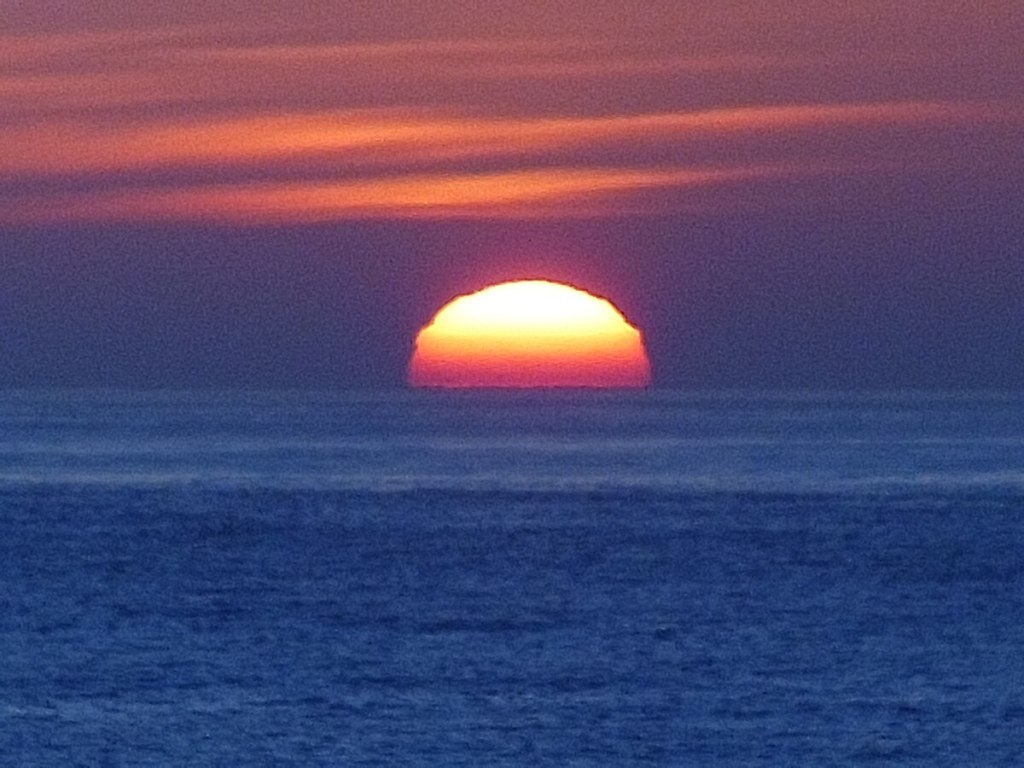
“Have you ever seen anything in your life more wonderful than the way the sun, every evening, relaxed and easy, floats toward the horizon and into the clouds or the hills, or the rumpled sea, and is gone – and how it slides again out of blackness, every morning, on the other side of the world, like a red flower streaming upward on its heavenly oils, say, on a morning in early summer, at its perfect imperial distance – and have you ever felt for anything such wild love – do you think there is anywhere, in any language, a word billowing enough for the pleasure that fills you, as the sun reaches out, as it warms you as you stand there, empty-handed – or have you too turned from this world – or have you too gone crazy for power, for things?”
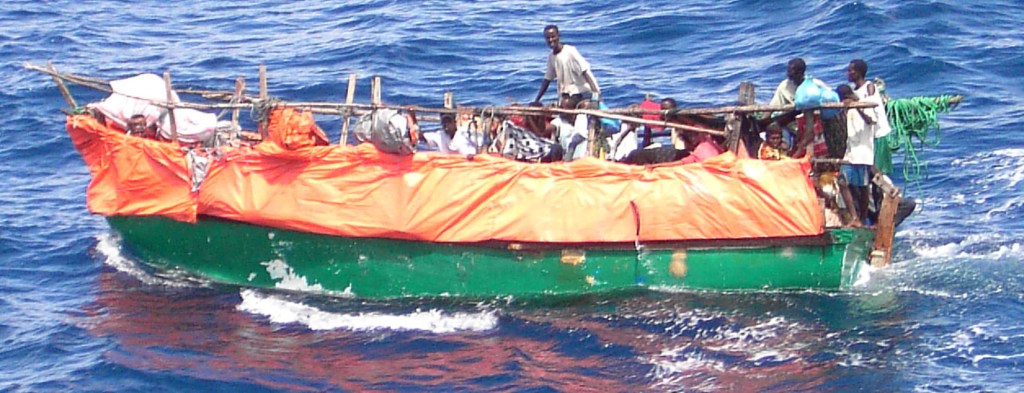
“no one leaves home unless home is the mouth of a shark. you only run for the border when you see the whole city running as well. your neighbours running faster than you, the boy you went to school with who kissed you dizzy behind the old tin factory is holding a gun bigger than his body, you only leave home when home won’t let you stay… you have to understand, no one puts their children in a boat unless the water is safer than the land. who would choose to spend days and nights in the stomach of a truck unless the miles travelled meant something more than journey. no one would choose to crawl under fences, be beaten until your shadow leaves you.. be pitied, lose your name, lose your family, make a refugee camp a home for a year or two or ten, stripped and searched, find prison everywhere and if you survive and you are greeted on the other side with go home blacks, refugees dirty immigrants, asylum seekers sucking our country dry of milk, dark, with their hands out smell strange, savage – look what they’ve done to their own countries, what will they do to ours? the dirty looks in the street softer than a limb torn off… insults easier to swallow than rubble, than your child’s body in pieces – for now, forget about pride your survival is more important. i want to go home, but home is the mouth of a shark home is the barrel of the gun and no one would leave home unless home chased you to the shore unless home tells you to leave what you could not behind, even if it was human. no one leaves home until home is a damp voice in your ear saying leave, run now, i don’t know what i’ve become. but i know that anywhere is safer than here.”


 Chorlton Unitarians